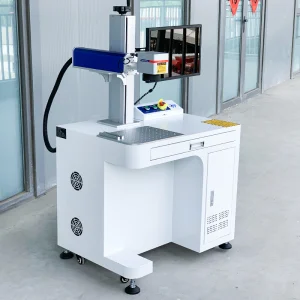
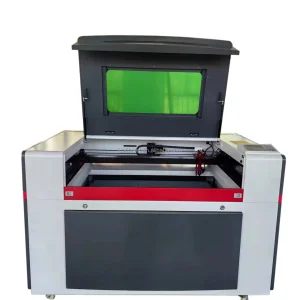
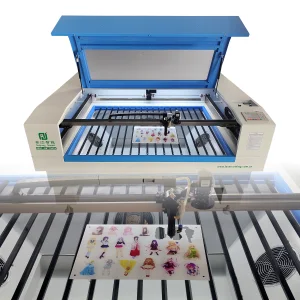
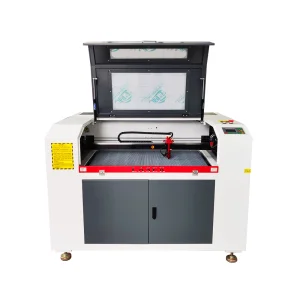
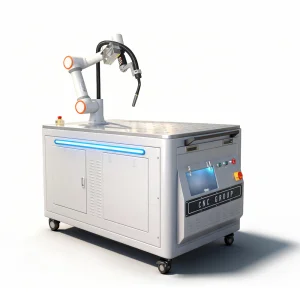
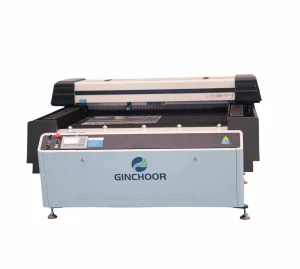
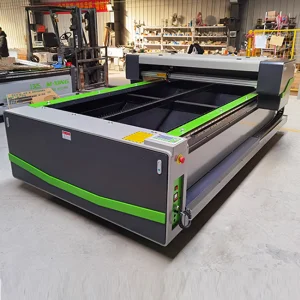
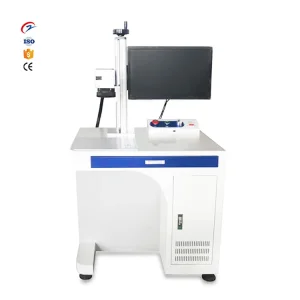
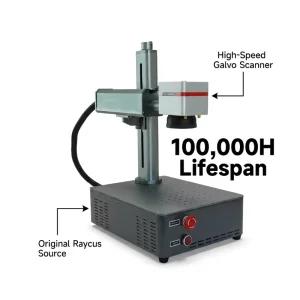
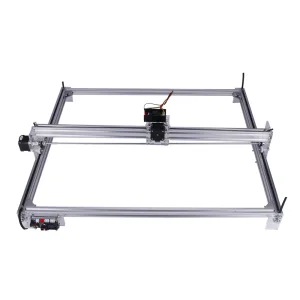
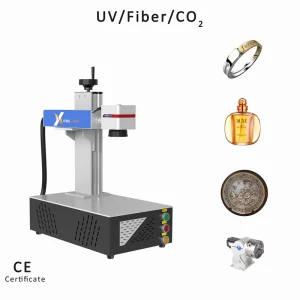
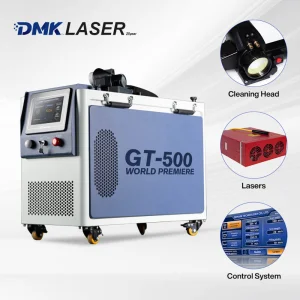
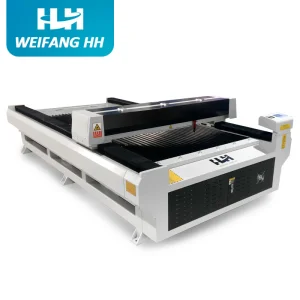
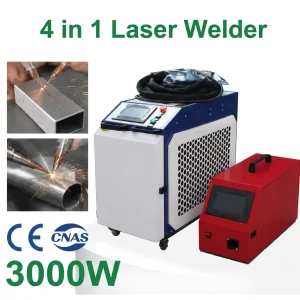
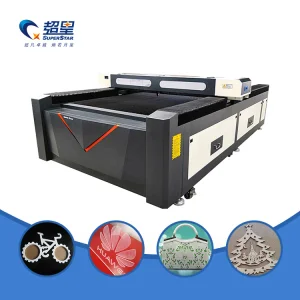
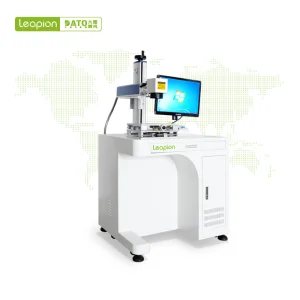
Explore our state-of-the-art catalog of fiber laser engravers, high-accuracy marking equipment, and multi-axis CNC systems customized for global logistics.
From Planar Cutting to Spatial Freedom: Why Modern Manufacturing Demands 3D Laser Kinematics.
Traditional manufacturing has long relied on conventional 3-axis CNC linear cutting structures. While these configurations are highly efficient for flat sheet metals and standardized panel processing, they fail to meet the challenges presented by complex 3D profiles, curved surfaces, stamped automotive chassis components, and non-linear aerospace assemblies. The integration of Multi-axis Laser Cutting Robots marks a monumental evolution in the fabrication landscape.
By pairing dynamic 6-axis articulated collaborative robot arms with specialized high-precision fiber laser heads, these systems introduce a degree of freedom (DoF) previously unattainable with standard gantry systems. A multi-axis laser cutting robot controls position and orientation simultaneously, executing cuts across complex contours, deep cavities, and complex angles without repositioning the workpiece.
Founded in May 2010, Chengdu Jigsaw Machine Co., Ltd. is a high-tech enterprise specializing in the research and development, manufacturing, sales, and service of industrial sawing and cutting equipment. With years of experience in the field of cutting machinery and industrial automation, the company is committed to providing efficient, reliable, and intelligent cutting solutions for global customers across a wide range of industries.
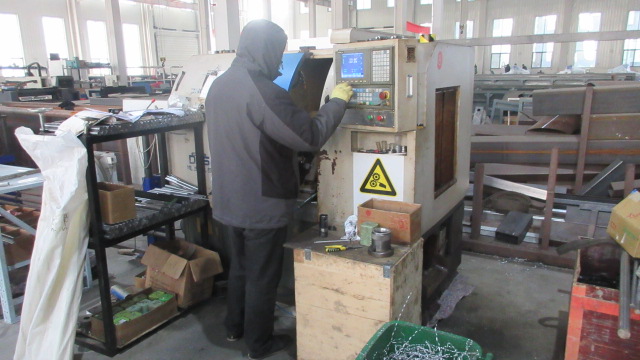
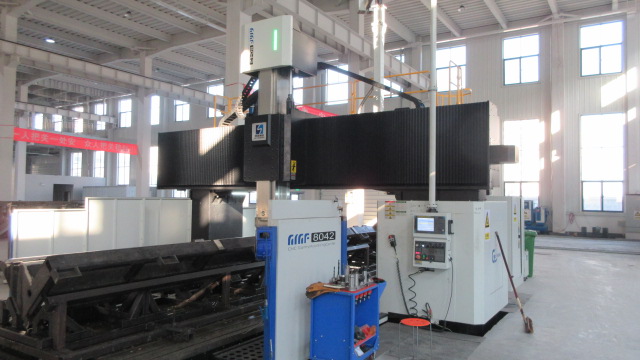
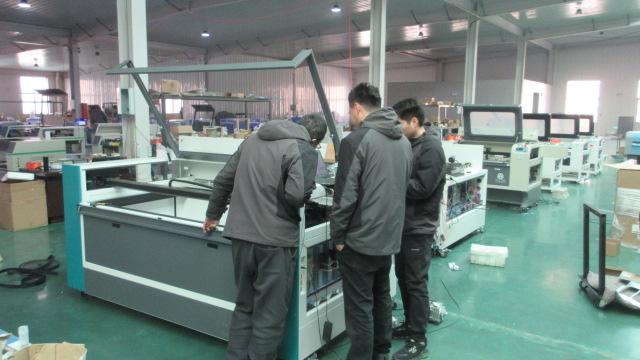
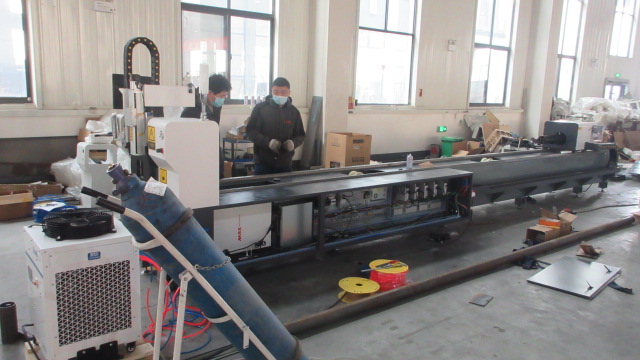
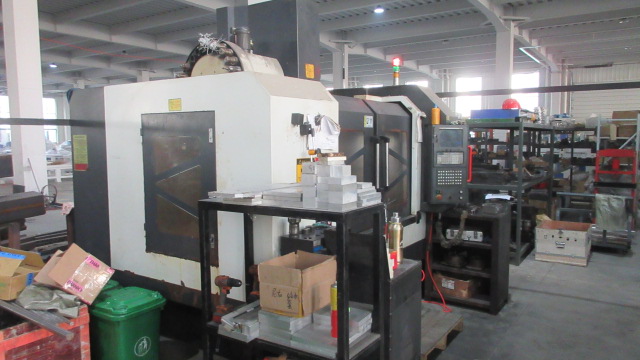
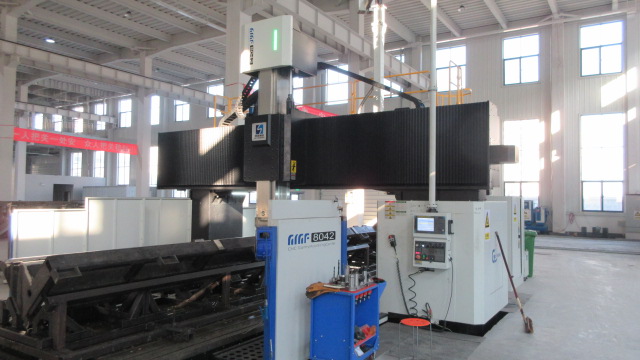
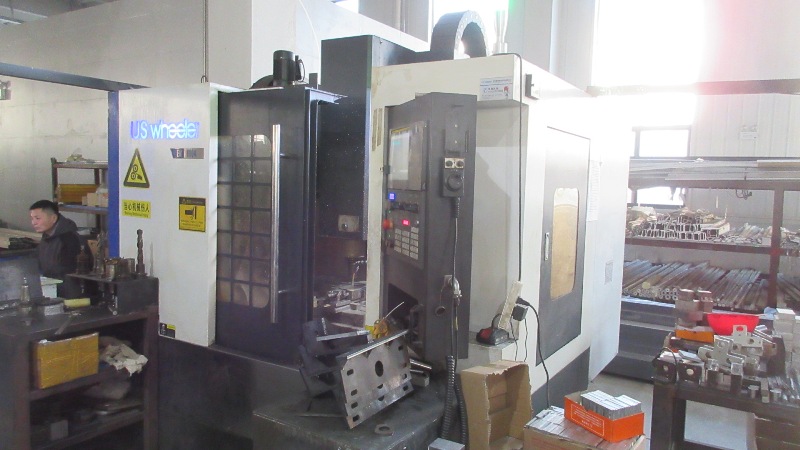
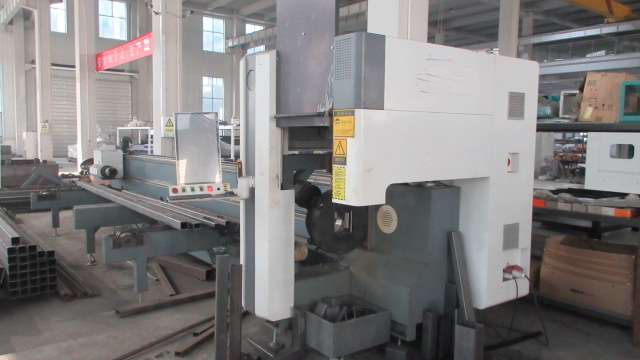
Operating out of a modern production facility covering over 2,000 square meters, our facilities are equipped with advanced machining, assembly, and testing systems. Over the last decade, our capabilities have scaled from traditional mechanical cutting systems to highly complex automation lines, motorized UV lasers, high-precision collaborative welding/cutting robots, and large-format fiber laser machinery.
Our operation is strictly structured to support global B2B procurement demands. With comprehensive certifications, including ISO9001 and CE, our production processes guarantee component traceability, rigorous quality testing, and robust environmental compliance. We work continuously with agents and distributors in multiple countries to deliver technical services, training, and swift after-sales support globally.
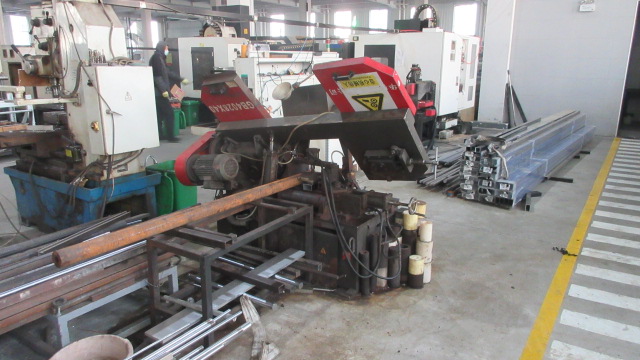
We verify every assembly step to guarantee precision and repeatability in every machine we deliver.
Deciphering Key Evaluation Standards for Industrial-Grade Multi-axis Laser Platforms
Global procurement teams prioritize TCO over simple initial investment. Factors like fiber laser electrical conversion efficiency (often exceeding 30-40% compared to CO2's 10%) directly impact utility costs. Standardized, high-durability components minimize maintenance interventions, reducing downtime costs.
For high-volume automotive and electronics fabrication, repeatability is critical. Robotic arm precision (such as ±0.02 mm tool-center-point repeatability) combined with dynamic trajectory correction ensures consistent dimensional tolerances across long shifts.
Smart factories require machines to communicate via standard protocols like EtherCAT, Profinet, or Modbus. Robotic controllers must support remote monitoring, automatic toolpaths, and real-time failure diagnostics to integrate smoothly into automated lines.
Adapting robotic precision to the distinct needs of diverse global industrial fields.
Precision trimming and cutting of high-strength thermoformed steel panels, body-in-white (BIW) structures, door pillars, and complex dashboard components without causing thermal degradation.
Fabricating weight-optimized components made of titanium alloys, nickel-based superalloys, and carbon fiber composites with extreme contour consistency and minimal heat-affected zones.
High-speed intersection profiling on round, square, and rectangular structural pipes. Essential for structural steel frameworks, cranes, and heavy construction equipment machinery.
Quick-change head designs and flexible robotic work cells allow rapid prototyping setups for kitchenware, electrical enclosures, elevator panels, and medical hardware manufacturing.
The Next Frontier of Smart Laser Processing: AI, Path Correction, and High-Speed Dynamics.
Next-generation multi-axis laser cutting integrates high-resolution stereoscopic vision and active tracking. During high-speed movements, physical component variations or warping can occur. Real-time optical sensors dynamically adjust the robotic arm’s path, ensuring high accuracy even if the physical part differs slightly from the 3D model.
Advancements in fiber laser sources allow dynamic adjustment of beam mode, spot size, and peak power during active profiling. When cutting tight radiuses, the system slows down while automatically adjusting beam characteristics to prevent over-burning, preserving edge quality and structural integrity.
Future manufacturing targets low environmental impact. Modern laser control algorithms synchronize gas flow with the cutting process, reducing auxiliary gas (nitrogen or oxygen) consumption by up to 35%. Smart standby modes minimize energy consumption during loading and unloading, supporting sustainable manufacturing initiatives globally.
Bridging geographical boundaries through local field services, certification alignment, and proactive support.
We align our machinery safety architectures, optical enclosures, and laser locking mechanisms with European (CE) and North American (UL/FDA) standards. This guarantees trouble-free customs clearance and simplifies facility approval processes.
Our localized networks provide prompt support. Local field service engineers handle onsite calibration, robotic programming training, component replacement, and software updates to keep your operations running smoothly.
We maintain regional warehousing partners to guarantee quick delivery of critical parts, such as laser protective windows, cutting nozzles, fiber cables, and electronic components, reducing logistics wait times.
Answering the most critical technical questions raised by B2B procurement professionals and integration engineers.
While a 5-axis CNC portal gantry offers high rigidity and accuracy over large envelopes, it has limited flexibility for complex undercuts, vertical profiles, and tight internal radiuses. Multi-axis robotic systems (often 6-axis articulated arms) provide greater freedom of movement, a smaller floor footprint, and lower capital cost. This makes them highly efficient for stamping lines and contoured sheet metal components.
Industry-leading fiber laser sources feature a diode lifespan of up to 100,000 hours, equivalent to over 10 years of multi-shift operation. Maintenance is minimal compared to CO2 lasers; there are no internal mirrors or turbine blowers to service. Routine maintenance focus is on replacing consumable protective windows, nozzles, and keeping the water chiller filters clean.
Collaborative robots, like the welding robot in our catalog, feature force-torque sensors designed for safe, direct human interaction. They are excellent for low-to-medium speed processes and easy teaching interfaces. For high-speed laser cutting, industrial robotic arms are typically preferred due to their high rigidity, which minimizes vibration at high accelerations.
The laser cutting head features a high-speed capacitive height sensor. It continuously monitors the electrical capacitance between the nozzle tip and the metallic workpiece to maintain a precise focus distance (e.g., within ±0.1 mm), preventing nozzle collisions and ensuring consistent cut quality.
Our systems support standard 3D CAD formats, including STEP (.stp), IGES (.igs), and DXF/DWG for 2D profiles. The offline programming software processes these files to automatically generate robot movement trajectories, check for workspace collisions, and optimize cutting speeds.
Explore our broader selection of high-power fiber cleaning systems, lightweight routers, and specialized laser engraving machinery.
 Jigsaw Machine