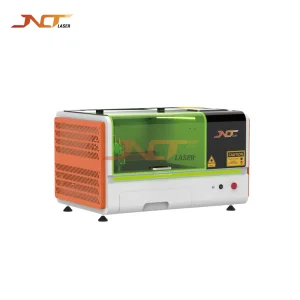
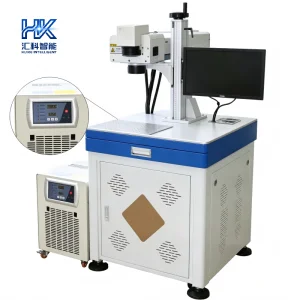
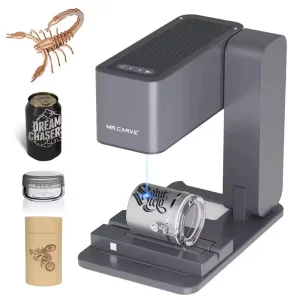
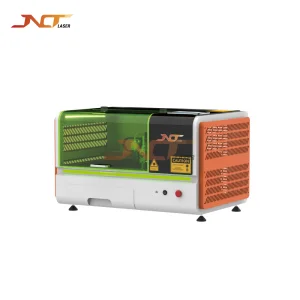
Explore our core engineering portfolio of high-precision desktop laser marking, cutting, and engraving systems built for modular enterprise scale.
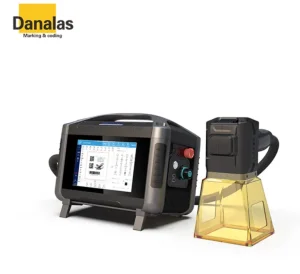
For decades, high-power material processing was the exclusive domain of massive gantry-type gantries and heavy industrial workcells. Today, the industrial landscape is experiencing a significant structural transition toward high-density desktop laser engraving machines. This shift is driven not by a compromise on capabilities, but by a demanding need for decentralized production, customized batch manufacturing, and rapid prototyping directly integrated into secondary assembly lines.
Modern B2B buyers—ranging from aerospace quality assurance teams seeking permanent micro-annealing capabilities, to high-volume semiconductor packing plants implementing 2D data-matrix etching—demand components that match the optical specifications of large-scale infrastructure while occupying a fraction of the workspace. This is where Chengdu Jigsaw Machine Co., Ltd. (established in May 2010) brings its decade-long automation and precision engineering heritage to the field of desktop lasers.
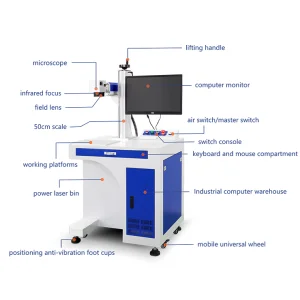
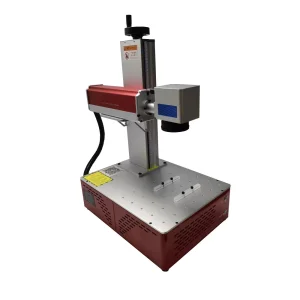
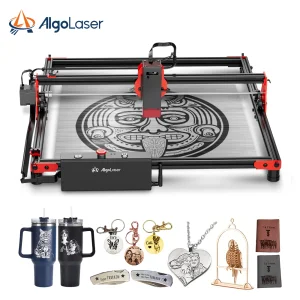
Understanding optical path configuration is vital for high-accuracy applications. Whether sourcing a Galvo scanning system or a modular CNC diode carriage, the underlying mechanical frame determines the machine's thermal expansion stability and vibration damping properties.
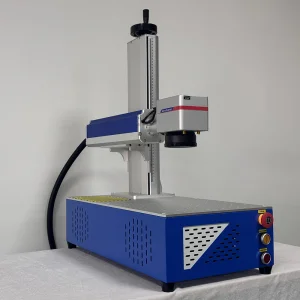
Utilizing high-speed digital galvanometer mirrors, our laser machines process vector files at marking speeds reaching 8,000 mm/s. The optical path features custom F-Theta field lenses ensuring uniform focal spot density across the entire marking plane.
Selecting the correct wavelength and pulse duration configuration is essential for maximizing yield and avoiding thermal deformation.
| Laser Source Type | Wavelength | Ideal Target Materials | Primary Industrial Applications | Key Strengths & Limitations |
|---|---|---|---|---|
| Fiber Laser (Raycus / JPT) | 1064 nm | Stainless steel, aluminum, brass, high-density ABS, titanium. | Deep engraving, metal marking, surface annealing, high-contrast serialization. | Extremely long lifetime (up to 100,000 hours), minimal maintenance, high electrical efficiency. Cannot engrave organic materials. |
| JPT MOPA Fiber Laser | 1064 nm (Adjustable Pulse Width) | Anodized aluminum, thin stainless foils, colored metals, plastics. | Black marking on aluminum, high-definition structural coloring on steel. | Variable pulse frequencies (1–4000 kHz) and durations (2–500 ns). Precise heat management to prevent warping of thin sheets. |
| UV Laser (Cold Processing) | 355 nm | Glass, engineered ceramics, high-reflection plastics, medical silicones. | Micro-marking of medical devices, sapphire substrate scribing, high-contrast cable marking. | Extremely minimal thermal heat-affected zone (HAZ), preventing cracks or carbonization. Higher initial capital cost. |
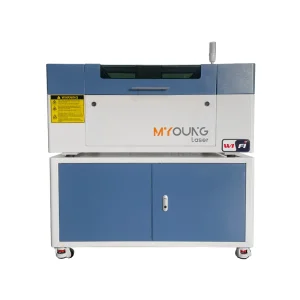
| CO2 Laser (Glass / Metal Tube) | 10,600 nm | Wood, acrylic, leather, rubber, cardboard, textiles. | Packaging engraving, customized leather embossing, template cutting, sign making. | Exceptional absorption rates in organic substrates. Requires periodic tube replacement and optical alignment checks. |
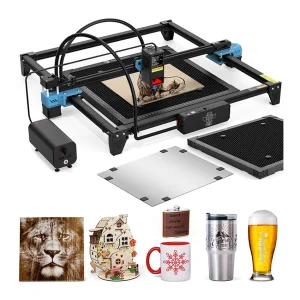
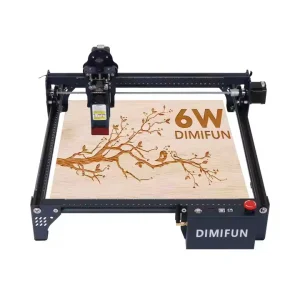
| Diode Laser (High-Speed CNC) | 450 nm - 455 nm | Soft woods, plywood, dark plastics, thin leather. | Low-to-medium volume personalization, local workshop prototyping, creative design. | Cost-effective, highly portable, simple maintenance. Slower processing speed compared to galvo-based optical paths. |
MOPA (Master Oscillator Power Amplifier) tech unlocks independent tuning of pulse duration and repetition rate. This is essential for delicate processes like high-contrast mark execution on electronics without thermal damage.
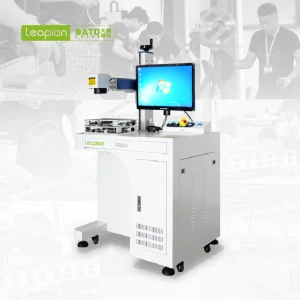
Integrated motherboard designs compatible with BJJCZ controllers and LightBurn environments support real-time vector format parsing (PLT, DXF, DST, BMP), facilitating automated variable serialization.
Equipped with dual active ball-bearing cooling fans or closed-loop internal heat sinks, maintaining the semiconductor diode and optical crystal inside optimal operating temperatures (15°C to 35°C).
For critical high-stress parts, mechanical stamping creates structural weaknesses. High-speed desktop fiber laser engraving delivers low-heat marking that preserves material integrity while passing rigorous salt-spray corrosion tests.
Anodized aluminum oxide layers require delicate ablation to expose the underlying raw metal without burning adjacent colors. Utilizing JPT MOPA systems lets operators produce high-contrast, razor-sharp vector logos and 2D matrix codes with zero deformation.
Every industry faces distinct production-floor obstacles. While a jewelry design workshop relies on 800W desktop fiber cutting systems to perform three-in-one cutting, drilling, and high-detail texturing of gold and silver sheet materials, a medical device manufacturer requires sterile, chemical-resistant marks on surgical tools.
Developing industrial desktop laser systems is not simply about mounting a laser diode onto a frame. It requires designing integrated optical paths that eliminate optical power loss and optical feedback. By tailoring target spot diameters and power profiles, our desktop equipment optimizes throughput and decreases per-unit marking cycle times.
Furthermore, because desktop units are frequently placed within assembly lines, integration with peripheral hardware is key. Our controllers support digital I/O lines, allowing synchronization with foot pedals, conveyor sensors, and robotic arms for automated processing cycles.
Combining heavy CNC tooling precision with optical engineering to deliver rugged, industrial-grade desktop laser chassis.
Founded in May 2010, Chengdu Jigsaw Machine Co., Ltd. is a high-tech enterprise specializing in the research and development, manufacturing, sales, and service of industrial sawing and cutting equipment. Building on years of expertise in cutting machinery and industrial automation, the company is committed to providing efficient, reliable, and intelligent cutting solutions for global customers across a wide range of industries.
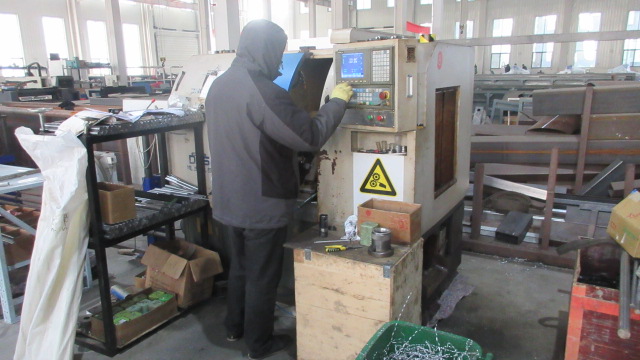
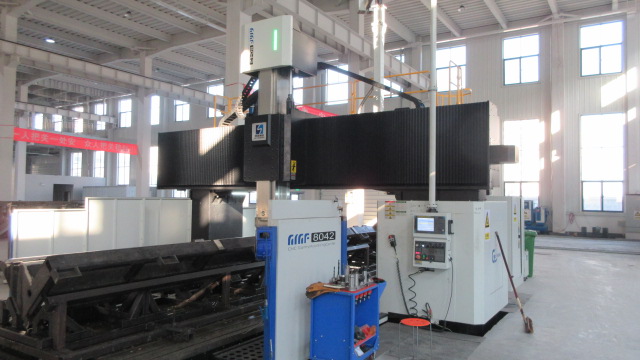
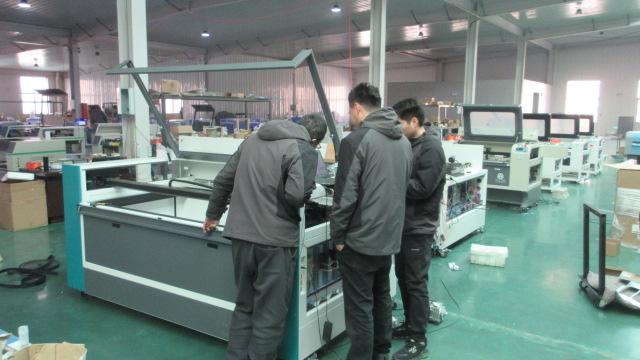
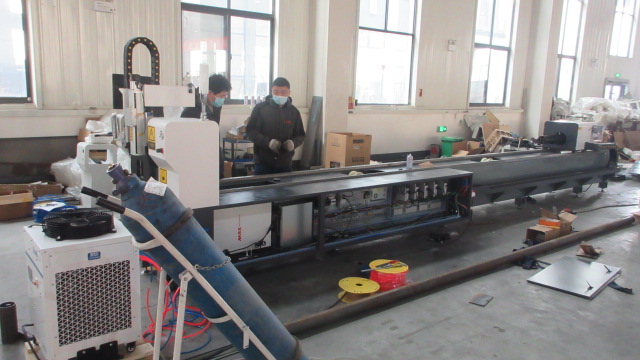
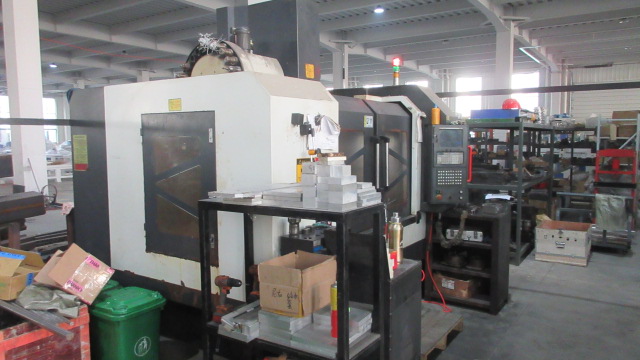
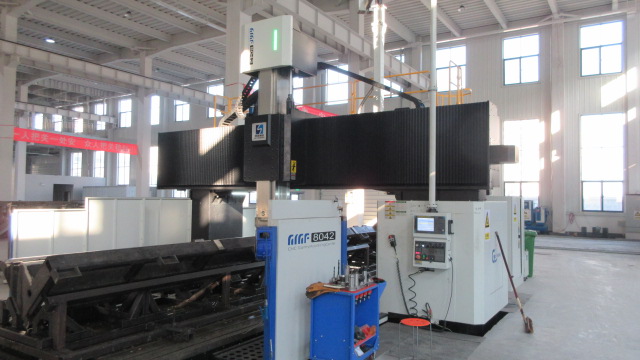
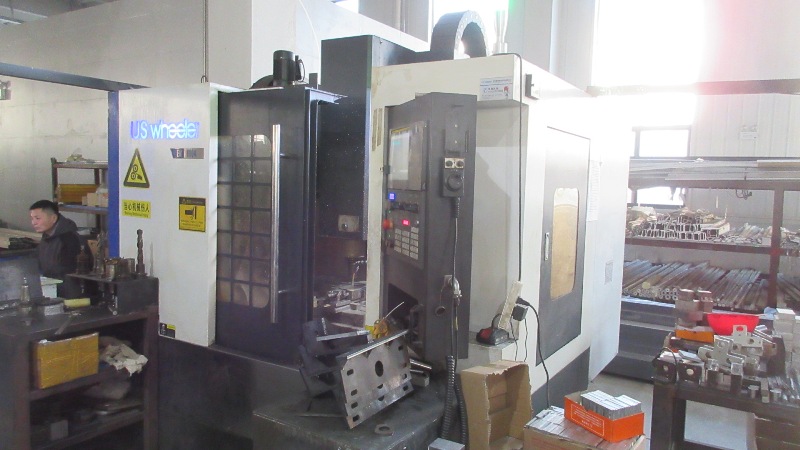
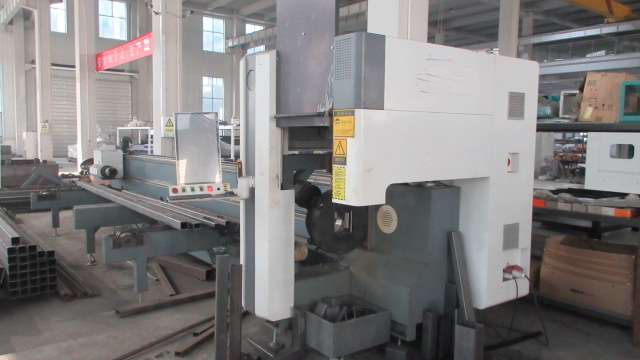
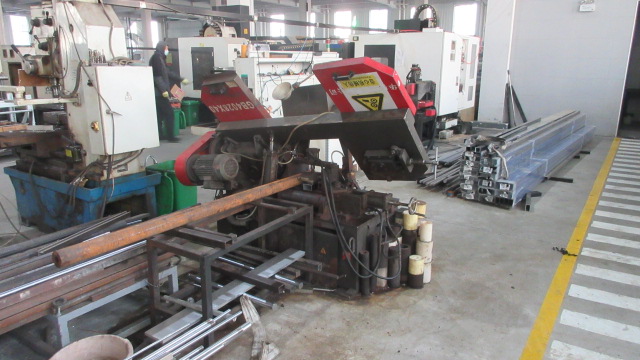
Operating from a modern production facility covering over 2,000 square meters, our facilities are equipped with advanced machining, assembly, and testing systems. By integrating traditional CNC routing, planing, milling, and grinding machinery with our laser manufacturing lines, we guarantee that every desktop laser frame exhibits the mechanical rigidity needed to minimize micro-vibrations and prevent beam deviation.
Stay ahead of the curve with our vision for the next generation of laser micro-machining ecosystems.
Future iterations of our desktop units will incorporate coaxial CCD camera modules powered by real-time computer vision. The system automatically reads workpiece orientation, corrects for angular skew, and dynamically offsets focal distances, ensuring zero marking errors on the assembly line.
As materials evolve, so must our engraving setups. We are establishing an industrial database link allowing machines to pull optimized speed, power, and pulse frequency settings directly from our cloud databases, simplifying operation on composite materials.
Our engineering team is researching dual-source optical engines. Sourced from a single chassis, users will be able to swap automatically between a 1064nm Fiber source and a 355nm UV source, enabling multi-material marking in a single production run.
Procuring capital equipment from overseas requires confidence in mechanical safety and regulatory standards. Chengdu Jigsaw Machine Co., Ltd. has established solid domestic and international distribution networks, ensuring partners and agents in multiple countries can deliver local technical support, field-replaceable unit (FRU) swaps, and immediate troubleshooting assistance.
All our products carry international certificates, including ISO9001 quality management system certification and the CE marking. Our design criteria align with key international directives:
Our commitment guarantees that B2B clients receive high-performance machinery, backed by international standards for safety and operational consistency.
From visual inspection of incoming laser diodes to output beam profiling using professional beam diagnostic equipment, our processes ensure that every machine delivers consistent performance.
Direct software integration means you can import high-complexity files in PLT, DXF, DST, BMP, or AI formats, keeping setup workflows smooth for design teams and shop floors alike.
Browse our selection of specialized laser cutting and marking systems tailored for high-accuracy and high-power applications.
Find technical answers to key questions about laser technology integration, mechanical configuration, and supply chain logistics.
Fiber lasers operate at a 1064nm wavelength and rely on high thermal energy to engrave or anneal metallic substrates. UV lasers operate at 355nm, employing "cold processing" that breaks chemical bonds directly without causing significant heat damage. UV lasers are essential for delicate surfaces like plastics, glass, and ceramics, while Fiber lasers are preferred for deep metal engraving.
JPT MOPA fiber sources allow operators to adjust both pulse duration (from 2ns to 500ns) and frequency. This fine pulse control makes it possible to engrave high-contrast black marks on anodized aluminum, perform colorful marking on stainless steel, and mark thin foils without causing heat-induced deformation or warping.
Our control boards integrate seamlessly with standard engraving software like EZCAD and LightBurn. They support vector and raster formats including PLT, DXF, BMP, JPG, PNG, and DST, allowing direct imports from design software like AutoCAD and CorelDraw.
Drawing on our background in manufacturing industrial sawing, milling, and heavy CNC equipment since May 2010, we build our desktop laser frames using rigid steel plates processed in our 2,000+ square meter factory. This structural stability minimizes micro-vibrations, ensuring consistent optical path alignment and high repeatability over long operating periods.
Our entire desktop laser range is ISO9001 and CE certified. When configured with protective laser enclosures, they comply with Class I laser safety guidelines, protecting operators from hazardous light scattering.
Fiber laser sources (Raycus or Max) offer an operating lifespan of up to 100,000 hours, requiring zero regular maintenance. CO2 glass tubes typically require replacement after 3,000 to 10,000 hours depending on workload, while UV sources run for approximately 20,000 hours before crystal degradation affects output power.
Yes. We offer customization options including variable-height Z-axis columns for tall workpieces, rotary chuck attachments for cylindrical parts, and custom digital integration options for automated factory setups.
We work with regional agents and distributors to provide localized assistance. We also supply online technical diagnostics, step-by-step video setup guides, and modular spare part replacement packages to keep your production lines up and running with minimal downtime.
 Jigsaw Machine