Explore our top industrial solutions featuring collaborative integration, high-frequency fiber lasers, and precise automated path control.
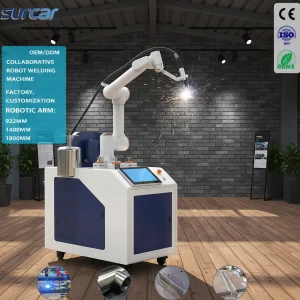
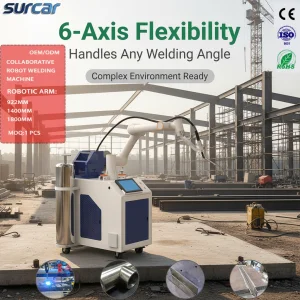
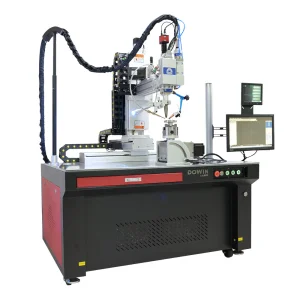
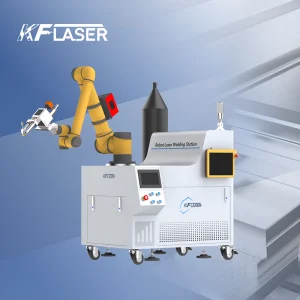
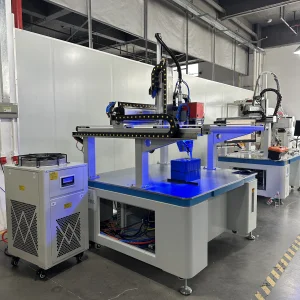
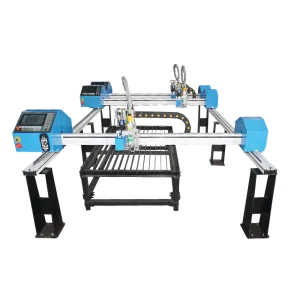
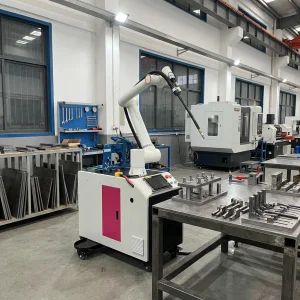
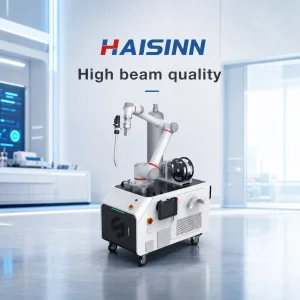
Analyzing the technical trajectory from manual procedures to intelligent multi-axis fiber laser systems.
In modern industrial fabrication, the adoption of Robotic Laser Welding Systems represents more than just an automation upgrade—it is a complete transformation of joint integrity, processing velocity, and manufacturing agility. Historically, heavy fabrication relied on MIG (Metal Inert Gas) and TIG (Tungsten Inert Gas) welding methods. While reliable, these techniques present distinct physical limitations: large heat-affected zones (HAZ), microstructural deformation due to high heat input, and the requirement for substantial post-weld grinding and surface finishing.
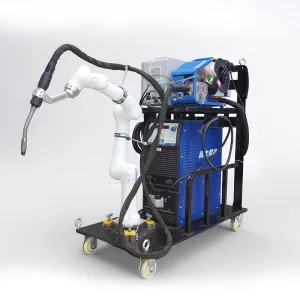
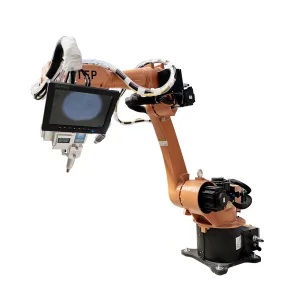
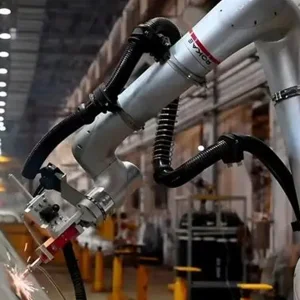
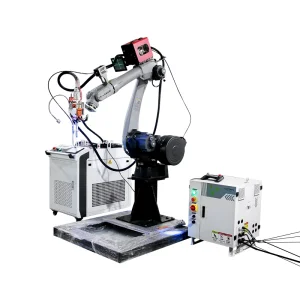
Fiber laser welding redirects high-density coherent light energy directly at the seam interface. The energy concentration achieves instant vaporization of the metal, creating a stable vapor capillary, or "keyhole." This keyhole mode enables deep penetration welds with exceptionally narrow weld beads and minimal thermal distortion. By mounting these fiber laser heads on highly articulated 6-axis robotic arms or collaborative robotic (cobot) platforms, manufacturers unlock unprecedented spatial freedom, achieving precision joins on complex 3D profiles that were previously unreachable.
Delivers high energy directly to the target seam, achieving deep keyhole penetration while minimizing thermal impact on adjacent zones.
Because the heat input is localized and extremely brief, thin sheet metals and precision structures maintain geometric tolerances without buckling.
6-Axis articulated joints and customized gantry systems permit seamless movement over complex 3D contours, curves, and vertical seams.
"According to industrial growth metrics, transitioning from traditional MIG/TIG processes to automated fiber laser workstations yields up to a 5x improvement in linear processing speed while reducing post-weld grinding labor overhead by 85%."
Key criteria utilized by factory managers, OEM procurement heads, and system integrators to evaluate system acquisitions.
Procuring a robotic laser welding solution represents a capital expenditure that must justify itself through prolonged uptime, high versatility, and rapid ROI. Industrial buyers evaluate systems across several critical parameters:
| Evaluation Parameter | Technical Specification Standard | Operational Impact & ROI Benefit |
|---|---|---|
| Laser Source Efficiency | 1000W to 6000W Continuous Wave (CW) Fiber | Lower electrical draw, long diode lifespan (>100,000 hrs), and capability to process reflective metals (copper, aluminum). |
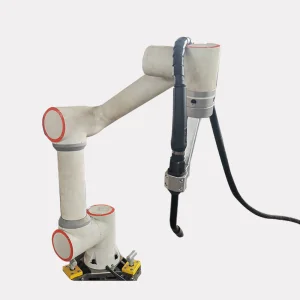
| Motion Control & Payload | 5kg, 12kg to heavy-duty payload collaborative arms | Allows mounting of heavy optical heads, auxiliary gas manifolds, and seam-tracking vision cameras without compromising speed. |
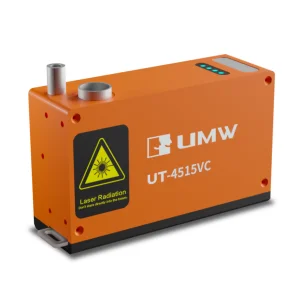
| Seam Tracking Capabilities | Active Laser Profiler / Optical Triangulation | Compensates in real-time for part tolerances and gap variations, preventing defect formation. |
| Cooling Configurations | Dual-loop industrial water chillers vs. localized air systems | Ensures thermal stability of laser cavities and collimation optics during 24/7 continuous high-output operations. |
| Safety Integration | Class 4 Laser Enclosures, Light Curtains, Interlock Systems | Ensures compliance with local labor safety regulations (OSHA, CE Directive) preventing eye and skin exposure. |
Furthermore, global procurement requires systems that can easily adapt to changing product pipelines. A workstation configured today for automotive battery pack welding must be easily reprogrammable tomorrow for stainless steel appliance chassis fabrication. This is why multi-axis collaborative robots (Cobots) with hand-guiding program modes and programming-free interfaces have captured significant market share, lowering the training threshold for operators.
How emerging technologies such as Artificial Intelligence, real-time sensing, and new laser wavelengths are shaping industrial welding.
Next-generation systems integrate machine learning vision models. As the robot progresses along the weld path, high-speed cameras capture the melt pool geometry. If the fit-up gap deviates, the AI automatically modulates laser power, wobble frequency, and robot travel speed on-the-fly to guarantee penetration consistency.
Standard fiber lasers operate at an infrared wavelength (~1070 nm), which suffers from high reflectivity when working with non-ferrous metals like copper. The future roadmap includes hybrid light sources combining infrared with blue (450 nm) or green (515 nm) wavelengths, unlocking defect-free welding of EV battery busbars and copper components.
To reduce production downtime, factories utilize OLP software. Engineers design, simulate, and calibrate the entire robotic toolpath in a virtual environment. This digital twin testing identifies potential collisions, kinematic singularities, and joint limits before the physical robot even powers on.
Leading high-tech manufacturer specializing in industrial machining, precision cutting, and advanced automated solutions.
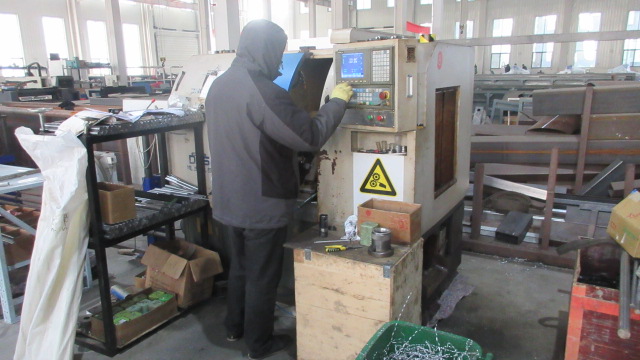
Founded in May 2010, Chengdu Jigsaw Machine Co., Ltd. is a high-tech enterprise specializing in the research and development, manufacturing, sales, and service of industrial sawing and cutting equipment. With years of experience in the field of cutting machinery and industrial automation, the company is committed to providing efficient, reliable, and intelligent cutting solutions for global customers across a wide range of industries.
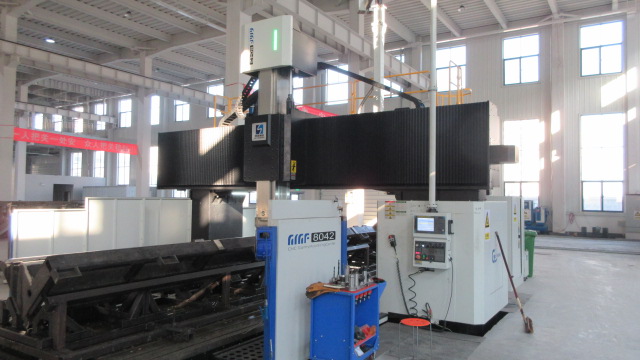
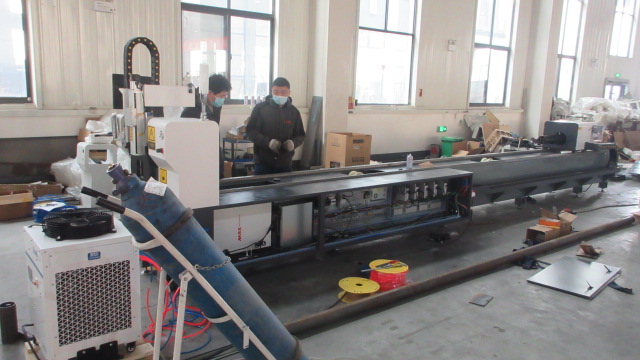
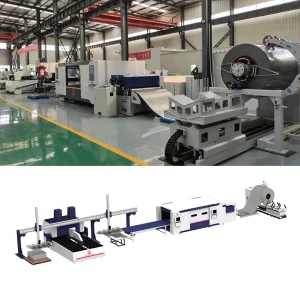
The company’s main product portfolio includes handheld jigsaw machines, industrial reciprocating saws, CNC sawing and cutting systems, automated cutting production lines, gantry-type heavy-duty cutting machines, tube and profile cutting equipment, as well as intelligent feeding systems and customized automation solutions. These products are widely used in woodworking, metal fabrication, construction, furniture manufacturing, and general industrial processing. Building on our deep foundation in precision CNC engineering, metal layout design, and robotic component handling, we provide complete, integrated workflows that seamlessly bridge raw material cutting with downstream Robotic Laser Welding Systems.
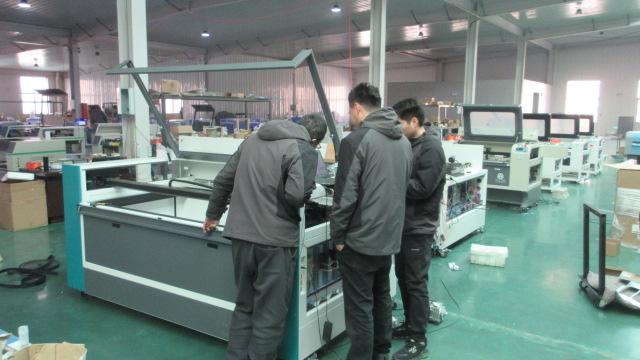
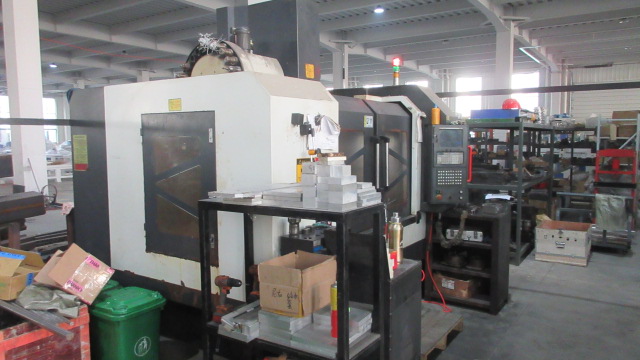
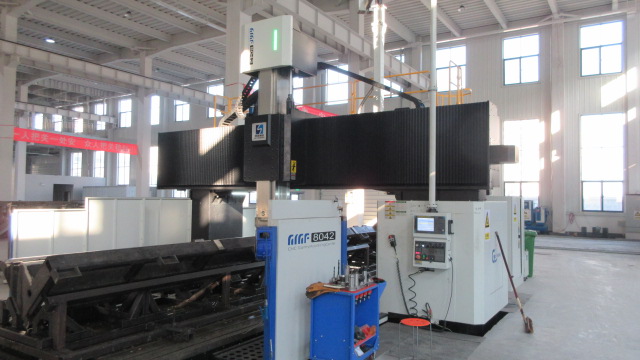
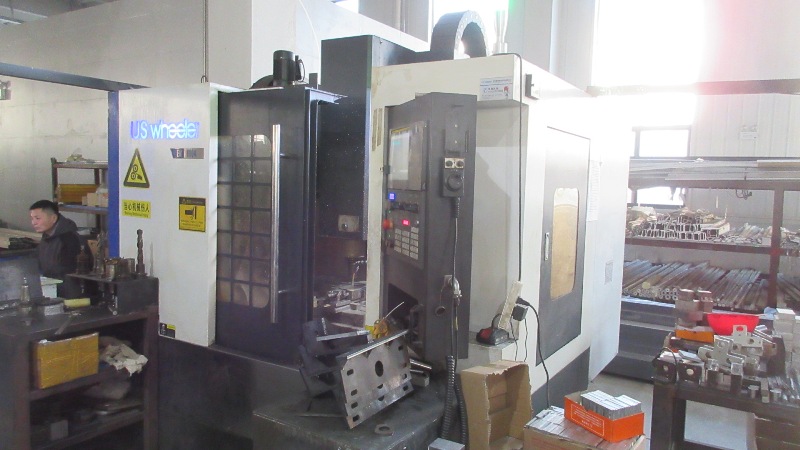
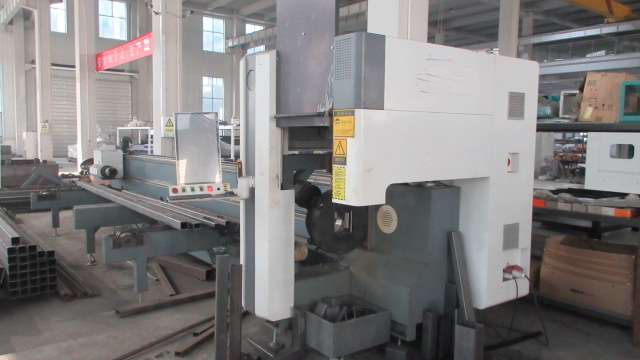
Chengdu Jigsaw Machine Co., Ltd. operates a modern production facility covering over 2,000 square meters, equipped with advanced machining, assembly, and testing systems. The company has established a strong domestic and international distribution network, with partners and agents in multiple countries and regions, enabling timely technical support and comprehensive after-sales service for customers worldwide.
Since its establishment, the company has continuously focused on innovation and resource integration in R&D, manufacturing, and application development. It has obtained ISO9001 international quality management system certification and CE certification, ensuring that all products meet strict international standards for quality, safety, and performance.
Guided by the spirit of “precision manufacturing and pursuit of excellence,” Chengdu Jigsaw Machine Co., Ltd. adheres to a development philosophy of continuous innovation and practical advancement. The company values talent development, encourages creativity, and is dedicated to improving product competitiveness and service capabilities.
With the core values of “creating value for customers, supporting employee growth, and earning industry recognition,” the company is committed to delivering high-performance, intelligent cutting equipment and integrated solutions, helping global clients achieve greater efficiency, automation, and sustainable industrial development.
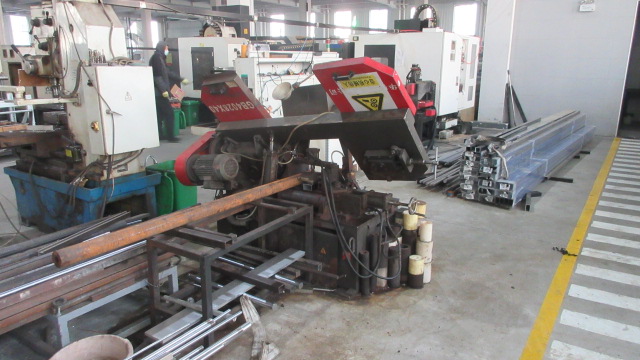
How automated laser welding integrates into key industrial supply chains while meeting safety rules.
Our solutions cater to several highly demanding macro industries:
Implementing high-power Class 4 lasers requires rigorous attention to safety regulations. A reliable supplier must offer complete physical safety integration, including:
Get answers to critical technical questions asked by automation engineers and procurement managers.
Explore our specialized track systems, customizable robotic workstations, and high-frequency automated platforms.
 Jigsaw Machine