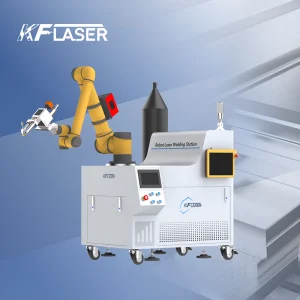
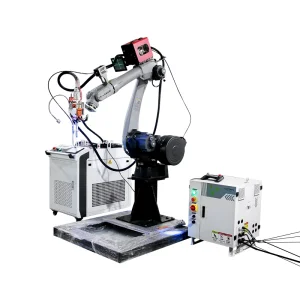
High-performance automated solutions optimized for heavy machinery, metal fabrication, and automotive assembly lines throughout Kazakhstan.
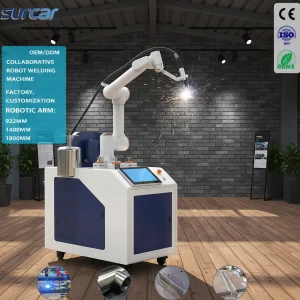
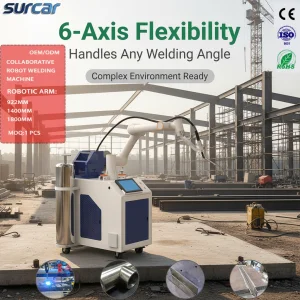
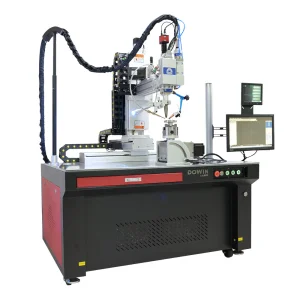
Kazakhstan stands as the dominant economic engine of Central Asia, transitioning rapidly from an extractive, resource-based economy to a diversified, high-value manufacturing powerhouse. Under regional industrial modernization initiatives, major manufacturing centers in Karaganda, Almaty, Nur-Sultan (Astana), Shymkent, and Atyrau are undergoing extensive technological upgrades. Heavy industries—such as mining machinery, oil and gas transport infrastructure, rolling stock manufacturing, and commercial automotive assembly—demand advanced, repeatable joining technologies that traditional manual welding simply cannot support at scale.
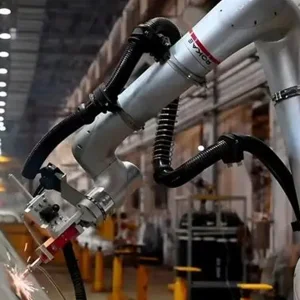
Kazakhstan's massive extraction operations rely on heavy components. High-power multi-axis robotic laser welders allow deep-penetration welds in high-strength steels (like Hardox), yielding robust joints that resist harsh mechanical stresses.
Locomotive and freight wagon production in centers like Pavlodar requires continuous, high-integrity welds. Optical seam-tracking robotic arms maintain precision over long runs, ensuring compliance with strict safety standards.
With foreign automotive joint ventures establishing assembly plants in Almaty and Kostanay, high-speed spot welding and seam welding solutions are vital to hit rigorous volume targets.
Modern engineering teams evaluate robotic laser welding equipment on distinct technical metrics. The table below represents the core parameters determining system reliability and throughput in commercial setups.
| Feature Parameter | Traditional Manual Welding (MIG/TIG) | Standard CNC Laser Gantry | Advanced 6-Axis Robotic Laser Welding |
|---|---|---|---|
| Heat Input & Distortion | High; significant thermal warping | Low; localized heating | Ultra-Low; real-time localized heat adjustment |
| Welding Speed | 0.3 – 0.6 m/min | 1.0 – 2.5 m/min | Up to 5.0 m/min (material & laser dependent) |
| Spatial Flexibility | High manual adaptability, low speed | Limited to 3-Axis Cartesian movements | 6-Axis spherical reach (optional external rotators) |
| Weld Seam Tracking | Visual estimation by human operator | Pre-programmed paths only | Active Optical/Laser Seam Tracking (Closed-Loop) |
| Integration Capability | Standalone operation | Partially integrated | Industry 4.0 IoT, remote diagnostic telemetry |
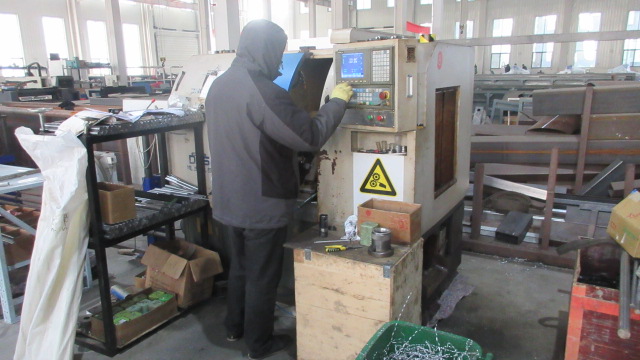
Founded in May 2010, Chengdu Jigsaw Machine Co., Ltd. has established itself as an innovative high-tech enterprise. Although initially recognized for industrial sawing, cutting, and high-performance CNC machining equipment, our deep expertise in CNC systems, mechanical kinetics, and multi-axis industrial automation paved a natural developmental pathway into robotic welding technology. Today, we specialize in high-end, intelligent cutting-to-welding production ecosystems, providing global partners with unified material processing solutions.
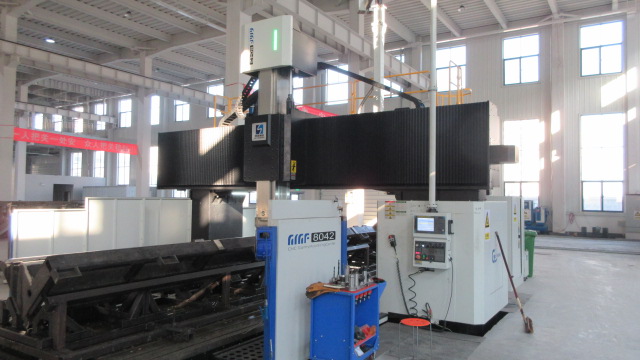
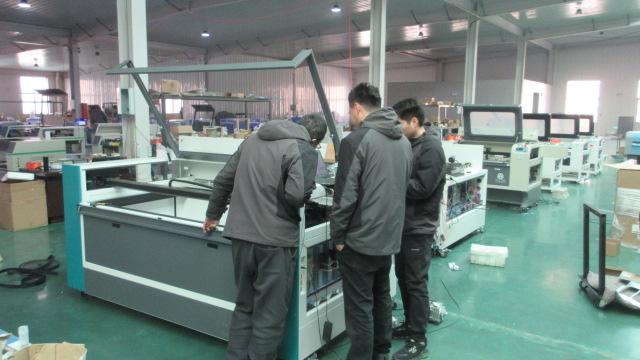
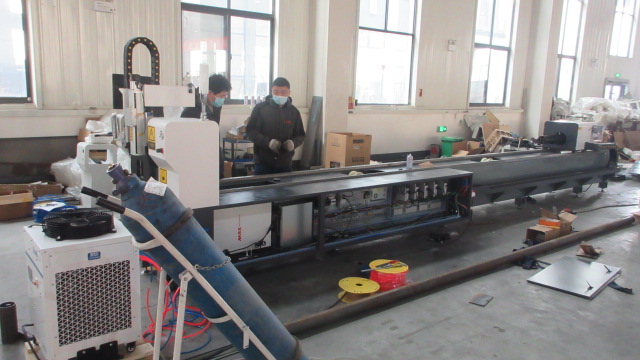
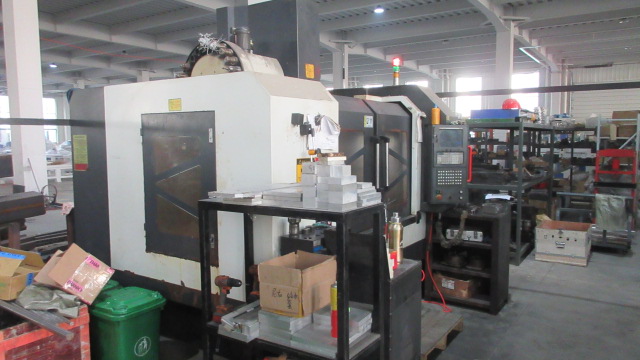
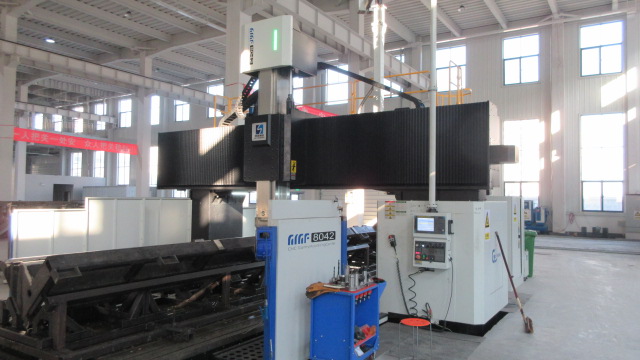
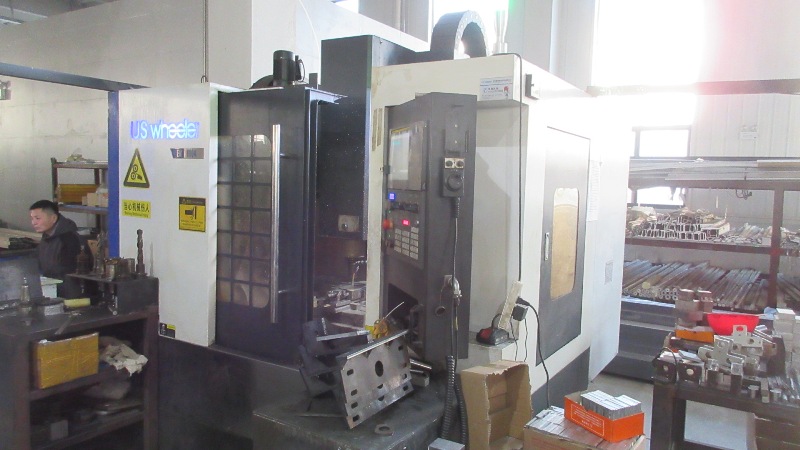
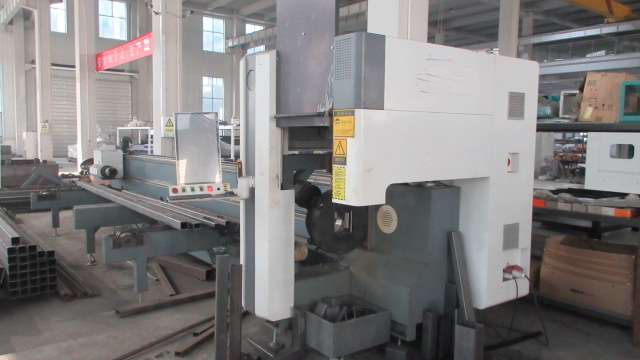
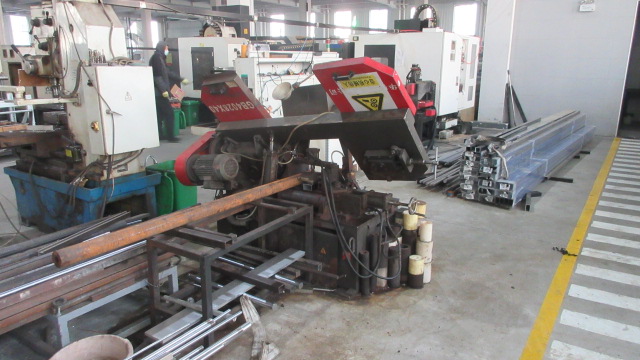
Our modern manufacturing facility covers over 2,000 square meters, equipped with high-precision milling, grinding, dynamic assembly, and electronic testing bays. By merging precision CNC motion control with fiber-optic laser modules, we ensure that every system leaving our factory is ready for high-intensity, continuous operation. We adhere to the strictest international standards, holding ISO9001 and CE certifications, allowing our equipment to fit seamlessly into high-standard plants across Kazakhstan and Europe.
As smart manufacturing evolves, robotic welding systems are progressing from pre-programmed paths to intelligent, adaptive environments. Manufacturers looking to secure long-term capital investments should focus on three defining trends:
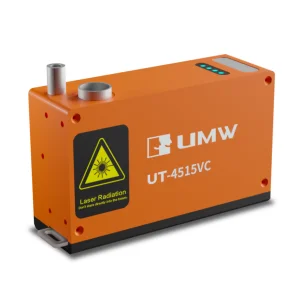
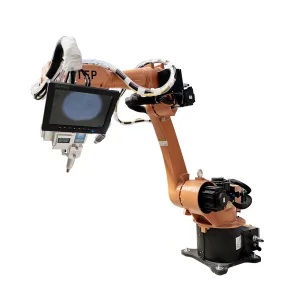
By employing high-definition optical triangulation systems, our advanced machines scan the joint geometry milliseconds ahead of the laser interaction point. The CNC unit corrects the robotic arm path dynamically, accommodating thermal expansion, material inconsistencies, and fit-up deviations.
For heavy industrial projects in Pavlodar and Karaganda, we combine the high deposition rate of conventional MIG welding with the deep penetration capabilities of fiber lasers. This hybrid approach delivers ultra-fast, single-pass welds on thick plates while dramatically lowering consumable gas and wire usage.
Incorporating intelligent software, our next-generation control platforms analyze the weld pool luminance, acoustic signatures, and laser reflection dynamics. This telemetry detects porosity, cracks, or deviation in real-time, labeling and storing weld data for comprehensive traceability.
Importing advanced capital equipment into Kazakhstan requires clean compliance processes and structured post-sales support. Chengdu Jigsaw Machine Co., Ltd. ensures smooth logistics, fast customs clearance, and long-term operating support through the following channels:
Our complete machinery line adheres to Eurasian Economic Union (EAEU) technical regulations. We supply all necessary EAC Declaration of Conformity documentation, safety declarations, and Russian-translated technical manuals, minimizing customs delay at the border.
We deploy application engineers directly to your production floor in Almaty, Nur-Sultan, or Karaganda. We conduct complete structural installation, optical calibration, robotic programming training, and safety courses for your engineers.
Every system can be integrated with secure VPN modules. In case of operational deviations, our Chengdu-based engineering team can log in remotely to diagnose program anomalies, parameters, and update the software suite immediately.
We work with distribution partners across Central Asia to stock replacement optical protective windows, laser nozzles, wire feed rollers, and replacement gas lenses, ensuring minimal downtime for high-speed manufacturing lines.
We address the critical engineering queries of plant managers, quality directors, and procurement specialists.
Yes. Aluminum and copper present high initial reflectivity, which can damage standard optical paths if back-reflection occurs. Our systems utilize fiber lasers with optical isolators and process the material at tilted angles (typically 5 to 10 degrees) or leverage wobble-head technology. This design oscillates the beam, coupling energy into the weld pool and preventing optical feedback damage.
Fiber lasers require temperature control. For operations in unheated workshops or plants where ambient temperatures fall below 0°C, we advise utilizing high-grade industrial glycols in the closed-loop water chillers. Additionally, we offer custom-enclosed, insulated climate-controlled laser generator cabinets that maintain optimal internal working temperatures regardless of exterior conditions.
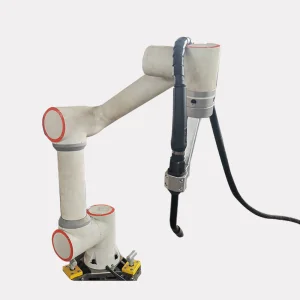
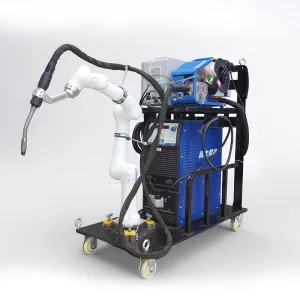
Our collaborative robotic systems feature intuitive, programming-free controls. Operators can lead the robot arm manually to the starting and ending weld points, pressing a single teach button on the handle to store the trajectory. The user interface converts this automatically into path coordinates, dramatically reducing the programming time from hours to minutes.
While fiber laser systems require higher initial capital investment, their operating costs are significantly lower. Laser welding utilizes minimal or no filler wire, uses less shielding gas, and has lower power draw compared to traditional multi-pass heavy MIG rigs. Additionally, by eliminating secondary grinding operations and post-weld distortion correction, labor costs per unit drop by 60%.
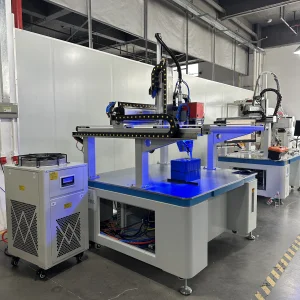
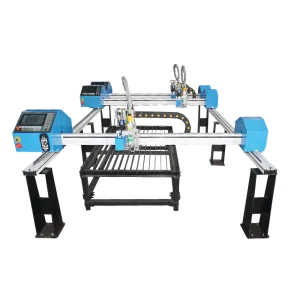
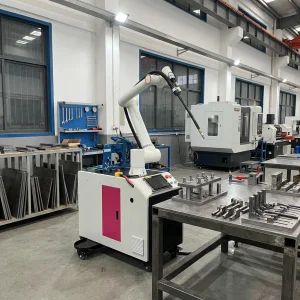
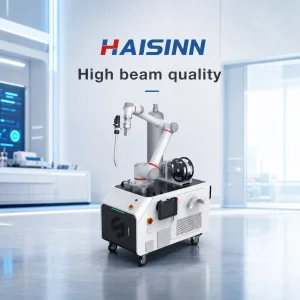
Explore our complete machinery portfolio, engineered for variable payloads, high-frequency output, and precise seam tracking across industrial environments.
 Jigsaw Machine