Choosing laser-welder power is not a contest to buy the largest number on the specification sheet. It is a process decision. A thin stainless-steel seam, a reflective aluminum bracket, and a thick carbon-steel joint absorb and conduct energy differently. Too little power can leave incomplete fusion. Too much may widen the heat-affected zone, distort a small part, or demand faster travel speeds. The right setting depends on material, thickness, joint design, beam quality, focus, and production rate—not wattage alone.
Market growth makes this choice increasingly relevant. MarketsandMarkets estimated the global laser-welding market at about US$2.7 billion in 2023 and projected US$4.6 billion by 2028. That forecast signals expanding adoption, but it does not prescribe a universal power level. For practical guidance, Dr. Reinhart Poprawe, former director of Fraunhofer ILT, is a relevant laser-processing authority. His published work emphasizes matching laser parameters to the material and application. I cannot verify a verbatim quotation from him about selecting welder power, so I will not invent one.
That distinction matters. A 1,500-watt source may suit one production cell and be excessive—or inadequate—for another. Start with the joint, then verify settings through documented trials and inspection. Small details count: a tight gap, a changed surface finish, or a slightly different focus can alter the result. There is no magic number. A sensible guide to how to choose the right laser welder power should explain the trade-offs, identify reliable starting points, and make clear where testing is still necessary.
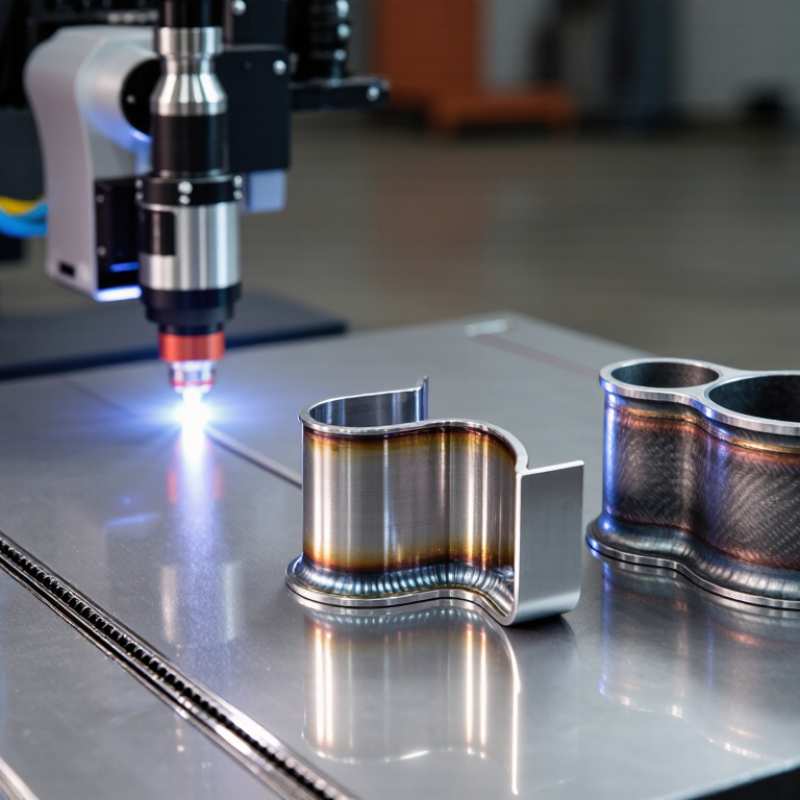
Laser welding power is the rate at which the beam delivers energy to a workpiece. For a given material and joint, power helps determine how quickly heat builds. Travel speed matters too: slowing down increases heat input per unit of seam. Focus position, spot size, surface condition, and joint fit also affect the result. A high setting may burn through thin sheet, widen the heat-affected zone, or create spatter. Too little power can leave a shallow bead or incomplete fusion. More watts do not automatically mean a stronger weld.
On thicker sections, additional power may support deeper penetration or faster travel, but only when the beam is properly focused and the joint is prepared. A displayed setting is a starting point, not a guarantee; optics, protective windows, and material reflectivity can change delivered energy. Even a clean test coupon can mislead if the production joint has a gap or different clamping. This is easy to overlook.
Tips: Start with scrap of the same material and thickness. Change one setting at a time. Inspect the bead on both sides, then record power, speed, and focus. If the seam looks good but its strength is uncertain, have it checked with an appropriate test.
| Factor | Value or relationship | Why it matters when choosing power |
|---|---|---|
| Laser output power | Measured in watts (W) or kilowatts (kW); 1 kW = 1,000 W. | Higher output can deliver more energy to the workpiece, but does not by itself guarantee a deeper or better weld. |
| Travel speed | Weld travel speed is commonly expressed in mm/s or m/min. | At the same power, moving more slowly generally increases the energy delivered per unit length; moving faster reduces it. |
| Energy per unit length | Approximate incident energy per length = power (W) ÷ travel speed (mm/s), giving J/mm. | Example: 1,000 W at 10 mm/s equals 100 J/mm of incident energy. This is a comparison aid, not the absorbed heat or a guaranteed weld setting. |
| Material and thickness | Required power depends on the alloy, joint design, thickness, fit-up, and desired penetration. | Thicker sections often need more delivered energy, while different materials absorb and conduct heat differently. Use qualified trials for each application. |
| Beam size and focus | Power density depends on how the beam is focused and the size of the spot on the workpiece. | The same laser power can produce different results with a different focal position, spot size, or beam delivery setup. |
| Too little delivered energy | May result in incomplete fusion, insufficient penetration, or an inconsistent joint. | Increasing power is one possible adjustment; travel speed, focus, joint fit-up, and shielding should also be checked. |
| Too much delivered energy | Can increase the risk of burn-through, excessive melt, distortion, or an undesirable weld profile. | Select power together with speed and beam conditions, then verify the result against the required weld quality. |
| Practical selection method | Define the material, thickness, joint, target speed, and acceptance criteria; run test welds and inspect them. | A suitable power rating is the one that meets the application’s quality and productivity requirements with a stable, repeatable process. |
Note: Power and energy relationships are general process guidance. Actual results vary with the laser system, material, joint geometry, beam settings, shielding, and process conditions.
It controls how much energy reaches the joint. Higher power can drive heat deeper into thicker metal.
The weld may have shallow penetration or incomplete fusion. It can look neat from above. Looks can fool you.
Thin sheet may burn through, curl, or develop a wide heat-affected area. Corners can form deep, uneven grooves.
It may allow faster travel while maintaining penetration. But speed, focus, material, and joint fit also affect results.
Moving too quickly can leave incomplete fusion. Moving too slowly can add excess heat and distort the part.
Use scrap with the same material and thickness. Check the bead and penetration, not just its shine.
Raising power may not help. Try checking travel speed and joint fit-up; a small gap can change the result.
Inspect both sides and test a sample when suitable. A cross-section can show penetration, though it takes time.
Choosing the right laser welder power is essential for producing strong, consistent welds efficiently. Power influences how deeply the laser penetrates, how quickly a joint can be completed, and how much heat affects the surrounding material. The ideal setting depends on factors such as material type and thickness, joint design, welding speed, and the quality requirements of the finished part. Understanding these relationships helps operators determine how to choose the right laser welder power for each task rather than relying on a single setting for every application.
Too little power may result in shallow penetration, weak joints, or incomplete fusion, while excessive power can cause distortion, burn-through, or unnecessary energy use. A balanced approach matches the output to the material and process, then adjusts settings through careful testing and monitoring. By considering weld quality, production speed, material needs, and operating costs together, users can achieve reliable results while avoiding defects and using equipment efficiently.

 Jigsaw Machine