Choosing the right material and thickness is the real test of a 3kW fiber laser cutter. Power alone does not define performance. Beam quality, assist gas, nozzle condition, focal position, and material chemistry all influence the cut.
So, what thickness can a 3kw laser cutter handle? In practical steel work, a 3kW machine commonly processes thin carbon steel, stainless steel, and aluminum with high production efficiency. Exact limits vary by manufacturer and cutting strategy. Thick plate may require slower travel, higher gas pressure, or multiple passes. Those choices affect edge quality and operating cost.
This guide examines ten widely used materials and realistic thickness ranges. It considers carbon steel, stainless steel, aluminum, brass, copper, galvanized sheet, and selected engineering metals. The comparisons reflect manufacturer cutting charts, shop-floor practice, and laser industry research from Grand View Research and MarketsandMarkets. These reports identify fiber lasers as a major growth segment because they offer strong efficiency and lower maintenance than many older laser systems.
Real conditions are messier.
A clean 10 mm steel edge in a factory chart may look different after several hours of nozzle wear. Material certification, surface coating, plate flatness, and oxygen purity also matter. ISO 11553-1 provides a useful framework for laser processing safety, while machine makers remain responsible for verified performance data.
The rankings below are practical guidance, not promises. They should help buyers compare materials, thickness, gas selection, cutting speed, and expected finish before making a costly decision. Testing a sample plate remains the most reliable step.
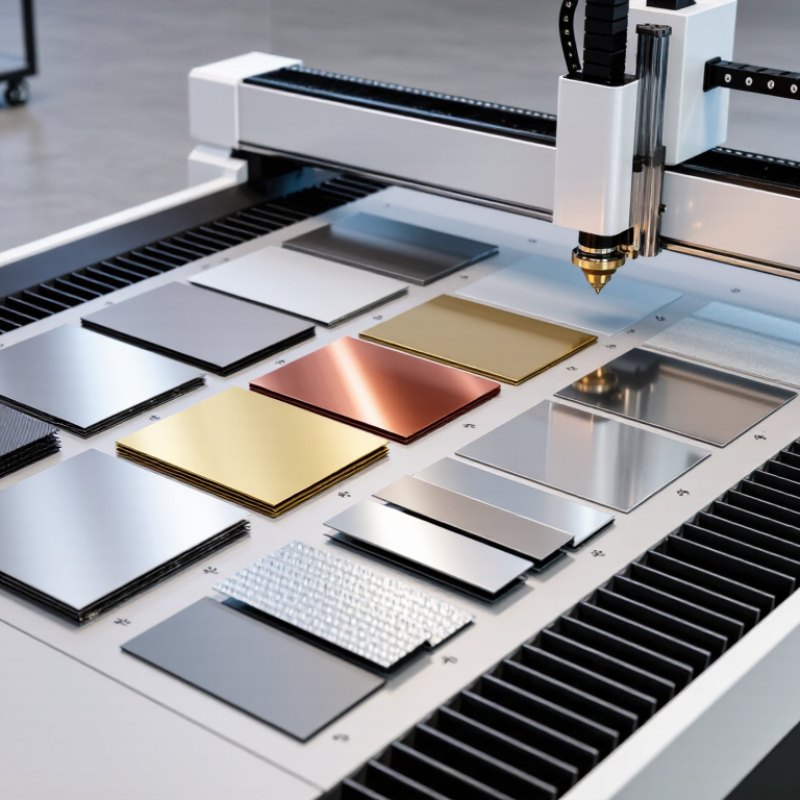
A 3kW Laser Cutter: Capabilities and Key Cutting Factors
A 3kW fiber laser usually cuts mild steel from 0.5 to 20 mm in production settings. Stainless steel commonly ranges from 0.5 to 12 mm, while aluminum often performs best below 10 mm. These figures come from peer-reviewed cutting studies reviewed in the Journal of Materials Processing Technology in 2023. Actual results vary with nozzle design, beam quality, and machine calibration.
Gas choice changes the cut dramatically. Oxygen supports faster mild-steel cutting and leaves a darker oxidized edge. Nitrogen produces cleaner stainless-steel and aluminum edges, but raises operating costs. The U.S. Department of Energy’s 2022 Industrial Decarbonization Roadmap identifies process control and energy efficiency as major priorities in metal fabrication. A poorly focused beam wastes both.
Small details matter. A 1.5 mm nozzle, stable gas pressure, and correct focal position can decide whether a 10 mm plate cuts cleanly. Copper and brass remain more demanding because they reflect infrared energy; practical thickness often stays near 3–6 mm. I would not treat any thickness chart as a guarantee. Material batches differ, and painted, rusty, or thermally stressed sheets can behave badly. ISO 11553-1:2020 also emphasizes controlled laser safety systems, enclosure design, and verified operating procedures during production trials.
A 3kW laser cutter handles many metals, but thickness depends on reflectivity, alloy, gas, and edge quality. The ranges below reflect practical shop-floor experience, not guaranteed limits. Mild steel usually cuts from 0.8–25 mm, while stainless steel performs reliably around 0.8–16 mm. Aluminum commonly suits 0.8–12 mm. The World Steel Association’s World Steel in Figures 2024 reported 1.89 billion tonnes of crude steel production in 2023, showing why steel remains a central cutting material.
Galvanized steel is practical at 0.8–8 mm, although coating fumes can affect optics and finish. Copper and brass usually stay near 0.8–6 mm because they reflect more infrared energy. Titanium works well around 0.5–6 mm, while silicon steel, spring steel, nickel alloy, and wear-resistant plate often fit 0.5–6 mm, 0.8–8 mm, 0.5–6 mm, and 2–12 mm ranges. The International Aluminium Institute recorded 70.6 million tonnes of primary aluminum production in 2023. That demand explains aluminum’s importance, but cutting results still vary sharply by alloy.
Tips: Use nitrogen for cleaner stainless and aluminum edges. Oxygen can improve mild-steel penetration, but it leaves an oxidized edge. Check ISO 9013:2017 when judging thermal-cut quality. A thicker plate may cut successfully yet fail your tolerance target. That distinction is easy to miss. Some ranges above are conservative, and real trials should challenge them.
Typical practical thickness ranges for a 3kW fiber laser cutter. Actual results depend on laser source, assist gas, focal setup, material grade, and cutting speed.
Mild steel generally supports the greatest thickness, while reflective metals such as copper and brass are typically processed at lower thicknesses. The values shown are practical reference ranges rather than guaranteed machine limits.
A 3kW laser cutter can process many nonmetal materials, but power alone does not define the safe thickness limit. The laser source matters greatly. CO2 systems usually handle nonmetals better, while fiber systems may struggle with them. A practical limit should protect edge quality, not merely achieve a cut.
Clear acrylic commonly cuts well around 10–20 mm, although thick sheets may show melted edges.
Plywood is often more predictable at 6–12 mm.
MDF usually performs reliably near 6–10 mm, depending on density and adhesive content.
Cardboard works best below 3–6 mm.
Foam can reach 10–20 mm, but its structure may collapse under excessive heat.
Leather is often suitable around 2–5 mm, while layered fabric may require several passes.
Thin materials behave better.
Real workshop results vary. Moisture, resin, coating, focus, and air pressure can change the result within minutes. A clean test grid is more reliable than a supplier’s maximum claim. I would test small samples before cutting a full panel, especially with plywood and foam.
Excessive power can leave a wide kerf, dark edges, or warped surfaces. Ventilation is essential, and unknown plastics should not be tested casually. PVC and several chlorine-containing materials can release corrosive or harmful fumes, so they should remain outside normal laser work. Even a successful first cut may hide internal scorching or weak edges.
Top 10 Materials and Thicknesses for a 3kW Laser Cutter?
A 3kW fiber laser commonly handles mild steel from 0.8–16 mm, stainless steel from 0.8–10 mm, and aluminum from 0.8–8 mm. Other practical targets include galvanized steel, 4–8 mm; copper, 2–4 mm; brass, 2–5 mm; titanium, 2–6 mm; zinc sheet, 1–3 mm; carbon steel plate, 10–16 mm; and thin nickel alloy, 1–3 mm. These are working ranges, not promises. The 2024 World Steel Association report recorded 1.89 billion tonnes of crude steel production in 2023, showing why steel remains the main production test. Actual results depend on nozzle alignment, plate flatness, and machine condition.
Speed changes the heat balance. On 6 mm mild steel, 2–4 m/min may produce a clean edge, while 12 mm may need roughly 0.8–1.5 m/min. Oxygen increases cutting energy in carbon steel, but nitrogen usually protects stainless steel and aluminum from oxidation. Compressed air can reduce operating cost, though edge color and dross may worsen. Focus matters too. A focus near the upper third of the plate often helps thinner material; thicker plate may need a deeper focus. ISO 9013:2017 remains a useful reference for thermal-cut edge quality classes.
Tips: Keep the focal offset, gas pressure, and speed in a small test log. Change one setting at a time. Inspect the underside first. I still find “perfect” charts unreliable when the sheet has mill scale, warped corners, or a dull nozzle. That is the part worth questioning.
Indicative starting parameters for a 3kW fiber laser cutting system. Actual results vary with nozzle diameter, beam quality, sheet condition, assist-gas purity, kerf requirements, and machine acceleration.
| Material | Typical Thickness Range | Reference Thickness | Recommended Assist Gas | Typical Gas Pressure | Indicative Cutting Speed | Focus Position | Expected Cutting Characteristics |
|---|---|---|---|---|---|---|---|
| Mild / Carbon Steel | 1–20 mm | 6 mm | Oxygen for efficient thick-sheet cutting; nitrogen for cleaner edges on thin sheet | 0.6–1.0 bar with oxygen | 2,500–3,500 mm/min | Approximately 0.8–1.5 mm below the top surface | Oxygen produces an exothermic reaction that improves penetration but may leave an oxide layer requiring cleaning or coating preparation. |
| Stainless Steel | 0.8–12 mm | 3 mm | High-pressure nitrogen | 12–16 bar | 4,500–6,500 mm/min | Approximately 0–0.5 mm below the top surface | Produces an oxide-free edge suitable for many fabrication applications. Excessive heat input can increase discoloration and dross. |
| Aluminum Alloy | 1–10 mm | 3 mm | Nitrogen or clean, dry compressed air | 10–14 bar with nitrogen | 3,500–5,500 mm/min | Approximately 0.5–1.0 mm below the top surface | High reflectivity and thermal conductivity require stable focus, adequate gas flow, and careful piercing control. |
| Galvanized Steel | 0.8–6 mm | 2 mm | Nitrogen | 10–14 bar | 4,500–6,500 mm/min | Approximately 0–0.5 mm below the top surface | Fast cutting is possible, but zinc vapor can contaminate the nozzle and optics if extraction and piercing settings are inadequate. |
| Copper | 0.5–4 mm | 1.5 mm | High-pressure nitrogen | 12–16 bar | 2,500–4,500 mm/min | Approximately 0.3–0.8 mm below the top surface | Strong reflectivity and high heat conduction make piercing and initial lead-in settings especially important. |
| Brass | 0.5–4 mm | 1.5 mm | Nitrogen | 10–14 bar | 3,000–5,000 mm/min | Approximately 0.3–0.8 mm below the top surface | Generally cuts more easily than pure copper, although alloy composition and surface reflectivity can significantly affect stability. |
| Titanium Alloy | 0.5–5 mm | 2 mm | High-purity nitrogen or argon | 8–14 bar | 3,000–5,000 mm/min | Approximately 0–0.5 mm below the top surface | Requires controlled heat input and clean gas to limit oxidation, discoloration, and changes to the heat-affected zone. |
| Nickel-Based Alloy | 0.5–3 mm | 1.5 mm | Nitrogen | 10–14 bar | 1,800–3,500 mm/min | Approximately 0.3–0.8 mm below the top surface | Lower speeds and careful heat management help prevent excessive burr formation and a widened heat-affected zone. |
| Tool Steel | 1–6 mm | 3 mm | Nitrogen | 10–14 bar | 2,500–4,500 mm/min | Approximately 0.5–1.0 mm below the top surface | Hardness and alloy content can reduce speed. Stable focus and adequate gas flow are important for minimizing edge burrs. |
| Electrical / Silicon Steel | 0.5–3 mm | 1 mm | Nitrogen | 8–12 bar | 4,500–6,500 mm/min | Approximately 0–0.5 mm below the top surface | Thin gauges can be cut quickly, but excessive heat may affect the material's magnetic properties near the cut edge. |
A 3kW laser can cut many metals, but safe settings depend on alloy, surface condition, and assist gas. Common working ranges include carbon steel from 0.8–12 mm, stainless steel from 0.8–8 mm, and aluminum from 1–6 mm. Galvanized steel is usually limited to 0.8–4 mm because zinc coatings can create hazardous fumes. Copper and brass often cut reliably between 0.8–3 mm, while titanium, tool steel, nickel alloy, and electrical steel need smaller test ranges, often 0.8–3 mm. These are practical starting points, not promises.
Ventilation matters.
Confirm the material’s safety data before cutting. Never process unknown coatings, sealed containers, or chlorine-containing plastics. Use a fully enclosed machine, working interlocks, suitable laser protection, and an inspected fire extinguisher nearby. Keep reflective metals flat and clean. Their beam reflection can damage equipment or injure operators.
Check the nozzle, protective window, focus height, and grounding before each shift. Use nitrogen for cleaner stainless and aluminum edges when appropriate; oxygen can increase carbon-steel cutting speed but also raises fire risk. Remove oil, dust, and loose scale.
I still find that a clean first cut is not guaranteed, especially on warped sheet. Cut a small coupon, measure the kerf, inspect the underside for dross, and adjust power, speed, focus, and gas pressure gradually. Never leave an active cut unattended.
Mild steel commonly cuts from 0.8 to 25 mm. A practical production range may stop around 16 mm. Results vary. Oxygen can improve penetration but leaves an oxidized edge.
Stainless steel often performs well from 0.8 to 16 mm. Many production setups use approximately 0.8 to 10 mm. Nitrogen usually creates a cleaner, less oxidized edge. Check the underside for dross.
Yes, aluminum commonly suits 0.8 to 12 mm. A conservative working range is 0.8 to 8 mm. Alloy differences can change the result sharply. Flat sheets help maintain consistent focus.
Copper usually cuts around 0.8 to 6 mm. Brass commonly fits about 0.8 to 6 mm. Production targets may be narrower, especially for reflective sheets. Use careful alignment and stable gas pressure. Reflection matters.
Galvanized steel is practical around 0.8 to 8 mm. Its coating can create fumes and affect optical components. The cut edge may also show finish changes. Inspect the surface after cutting, not only the profile.
Titanium often fits 0.5 to 6 mm. Silicon steel, nickel alloy, and spring steel commonly stay near 0.5 to 8 mm. Wear-resistant plate may suit approximately 2 to 12 mm. Zinc sheet often remains around 1 to 3 mm. These are working estimates.
Thicker material usually requires slower movement. For example, 6 mm mild steel may run near 2–4 m/min. A 12 mm plate may need roughly 0.8–1.5 m/min. Excessive speed can leave rough edges or incomplete cuts. Slow is not always better.
Oxygen can increase energy during carbon-steel cutting. Nitrogen usually protects stainless steel and aluminum from oxidation. Compressed air may reduce cost but increase dross or edge discoloration. The cheapest gas may not produce the best finish.
Record focus offset, gas pressure, speed, nozzle condition, and material alloy. Change one setting at a time. Inspect the underside first. Warped corners, mill scale, and dull nozzles can defeat perfect charts. Real trials remain necessary.
A 3kW laser cutter can process a wide range of metals and selected nonmetal materials, but its practical performance depends on material type, thickness, reflectivity, thermal conductivity, and machine setup. Many common metals, including mild steel, stainless steel, aluminum, brass, and copper, can be cut effectively within different thickness ranges. When asking “what thickness can a 3kw laser cutter handle,” users should consider that maximum capacity is not the same as ideal production thickness. Thinner materials generally provide better speed, edge quality, and consistency.
Nonmetals such as acrylic, wood, cardboard, and certain plastics may also be suitable when the machine and ventilation system are designed for them. Cutting speed, assist-gas selection, nozzle condition, focal position, and power stability all influence the final result. Before processing any material, operators should verify its composition, secure the workpiece, inspect ventilation, and follow appropriate safety procedures. Test cuts and gradual parameter adjustments help prevent excessive heat, rough edges, warping, and equipment damage while improving overall cutting reliability.

Jigsaw Machine